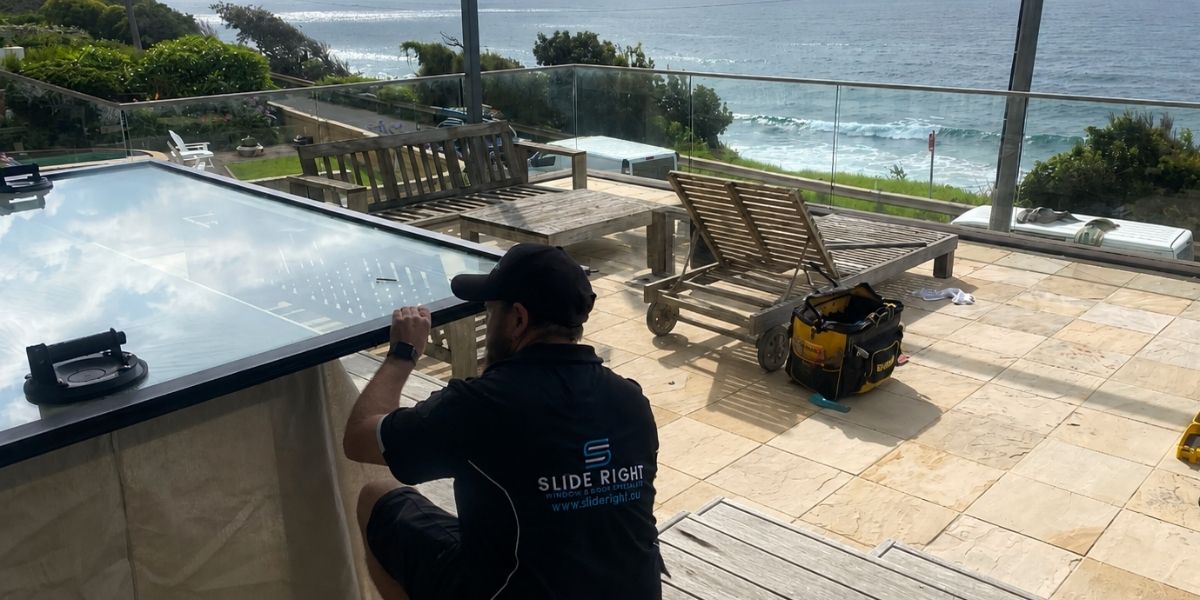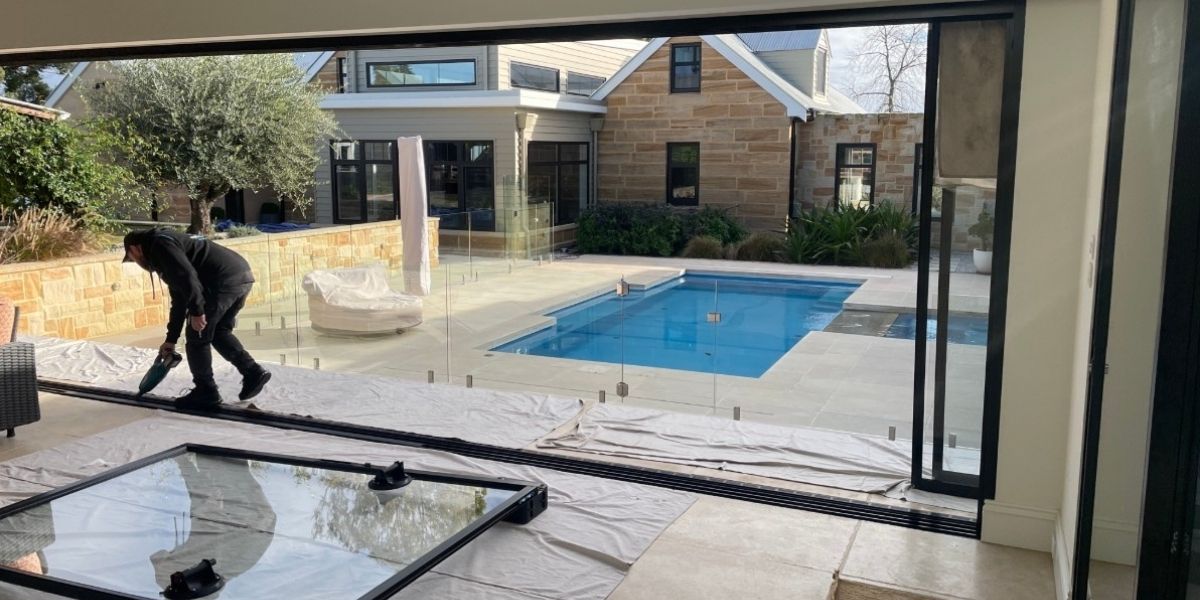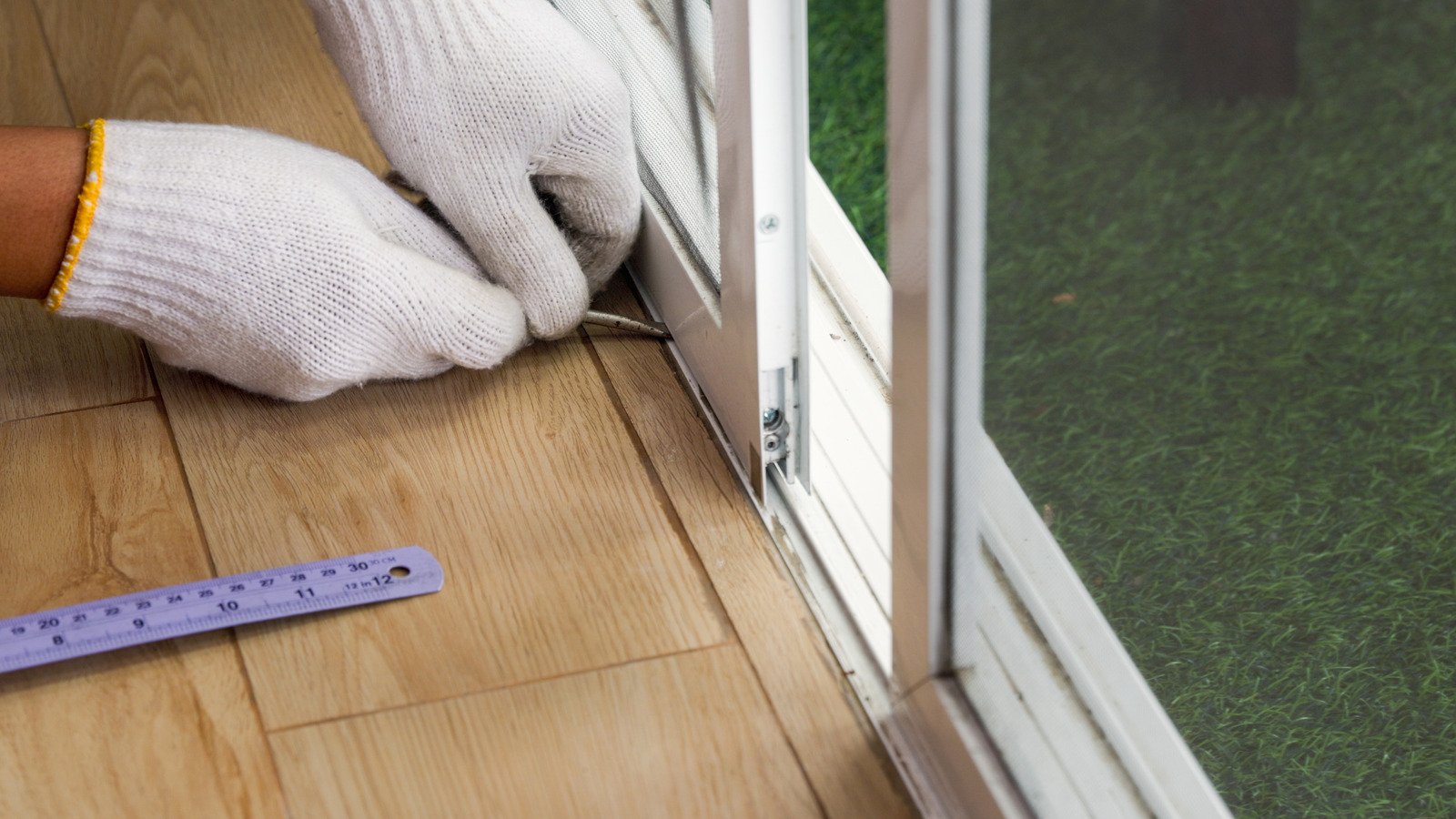

Worn rollers are the single most common reason a sliding door stops working properly. They’re also, in most cases, completely replaceable, which means a door that feels ready for the scrap heap can usually be brought back to smooth operation for a fraction of the cost of a new one. This guide covers how rollers work, how to tell yours have gone, the different types, whether it’s a job you can do yourself, and what drives the price.
If your door is dragging or sticking right now and you want the quick version, start with our guide on why your sliding door won’t slide. This page goes deeper on the rollers themselves.
What sliding door rollers actually do
Rollers are the small wheels tucked into the bottom of the door panel. The whole weight of the door, and on a glass door that’s a lot of weight, sits on those wheels as they run along the bottom track. A good roller spins freely, carries the load, and lets the door glide with one finger.
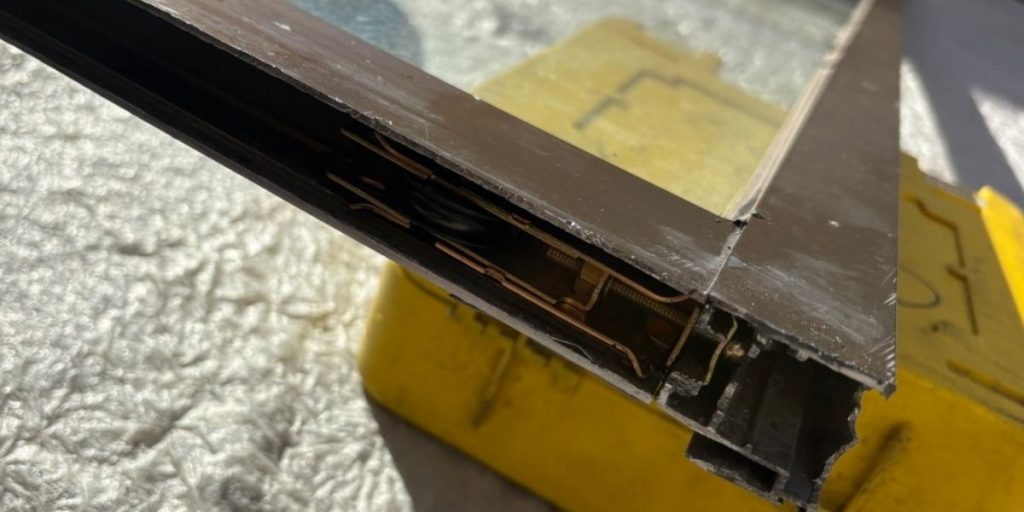
Most doors run on two roller assemblies, one at each bottom corner. Each assembly holds the wheel inside a housing, often with an adjustment screw that raises or lowers that corner of the door. When the wheel wears flat, cracks, or the bearing seizes, the door drops onto the track and starts dragging. That’s when the trouble starts.
Signs your rollers need replacing
You rarely need a professional to tell you the rollers have gone. The signs are clear once you know them:
- The door takes real effort to move, or two hands where it used to take one.
- Grinding, squealing or a metal-on-metal scraping sound as it slides.
- The door judders or catches at the same spot every time.
- A visible gap along the top or bottom that’s wider at one end, meaning one corner has dropped.
- You can see the wheels are flat on one side, cracked, or won’t spin when you flick them.
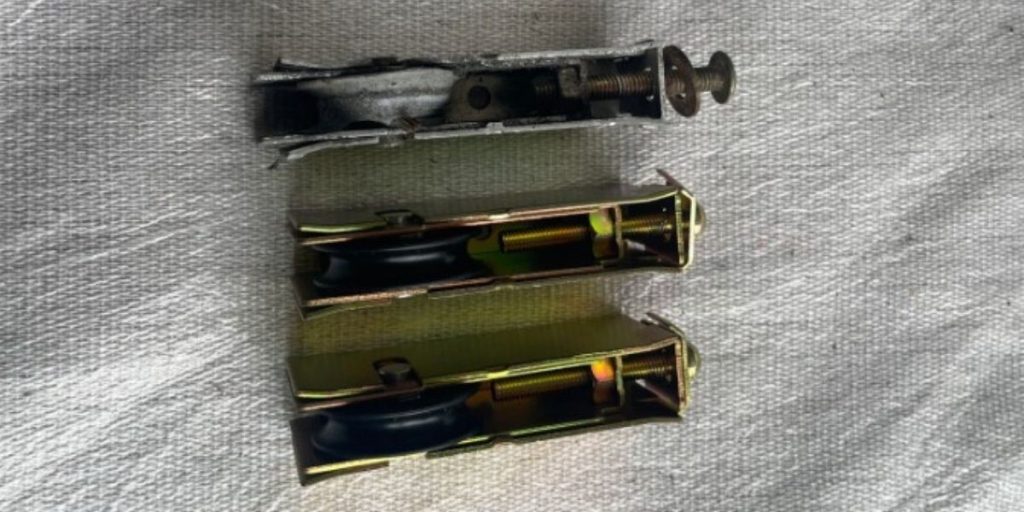
If lubricating and cleaning the track makes no difference, the rollers themselves are worn and no amount of spray will fix them.
The types of rollers
Not all rollers are the same, and the right one matters for how long the repair lasts.
Single versus tandem. Lighter doors run on a single wheel per corner. Heavier doors, especially large glass panels, use tandem rollers with two wheels per housing to spread the load. Fitting a single roller to a heavy door is a false economy, it just wears out again.
Wheel material. Nylon wheels run quietly and are gentle on the track. Steel wheels last longer but can be noisier. For anywhere near the coast, stainless steel or ball-bearing rollers are worth the extra, because ordinary steel corrodes fast in salt air.
Adjustable rollers. Better rollers have an adjustment screw built in, so the door height can be fine-tuned without pulling the whole thing apart. This matters in older homes where the frame has settled and isn’t perfectly square.
One thing worth knowing: there are over 200 different roller types in use across Australian sliding doors, from brands like Stegbar, Bradnams, Dowell and Boral. Matching the exact roller to your door is half the job. The wrong part either won’t fit or won’t last.
Can you replace them yourself?
Some people can, and for a light door in good nick it’s a doable weekend job: lift the door out, unscrew the old rollers, match and fit the new ones, rehang and adjust. Our guide on fixing a sticking door covers the basic steps.
The honest catch is threefold. First, heavy glass doors are genuinely heavy and awkward, and dropping one is dangerous and expensive. Second, getting the exact matching roller from those 200-odd variants is where most DIY attempts stall, you pull the door out, take the old roller to the hardware shop, and they don’t stock it. Third, if the track is also worn, new rollers alone won’t fix it.
If the door is light, the track is sound, and you can source the right part, have a go. If it’s a big glass door or you can’t identify the roller, it’s usually faster and safer to get it done properly.
How we do it
When we replace rollers, we bring the range of parts to you, so there’s no chasing hardware shops. We lift the door safely, clean out the track, fit rollers matched to your door and its weight, rehang it, and adjust the height so it sits square and runs smoothly. Where the track is also worn, we can cap it in the same visit rather than sending you back to square one. Most roller jobs are done on the spot in a single visit.
What affects the cost
There’s no single price for roller replacement, because it depends on a few things:
- How many panels need doing.
- The door’s weight and size, which decides single or tandem rollers.
- The roller type, standard nylon versus stainless or ball-bearing for coastal homes.
- Whether the track also needs repair or capping.
- Access and how the door is built, some are straightforward, some fight you.
Rather than guess over the phone, we quote on site so you get an accurate price for your actual door, not a ballpark that changes when we arrive. Multi-service discounts apply if you’re having other work done at the same time.
Coastal doors wear faster
If you’re near the water on the Central Coast or around Newcastle, salt air corrodes roller bearings and eats aluminium tracks far quicker than inland. It’s worth fitting stainless or marine-grade rollers when you replace them, so you’re not doing the same job again in a couple of years.
At Slide Right, roller replacement is one of the most common jobs we do, right across Sydney, the Central Coast and Newcastle. We match the right rollers to your door, sort the track at the same time if needed, and have most doors gliding again in a single visit.
We offer free quotes, a $0 call-out fee, and our work is backed by our workmanship warranty.
Call us on 1300 169 032 or book online through our Easy Online Enquiry and we’ll be in touch the same business day.
Learn more about our Sliding Door Repairs in Sydney.